
Most people who walk into the dojo have never done a martial art before. That is the normal way to begin, and every class we teach is open to beginners — there is no separate introductory course to wait for and no start date to catch.
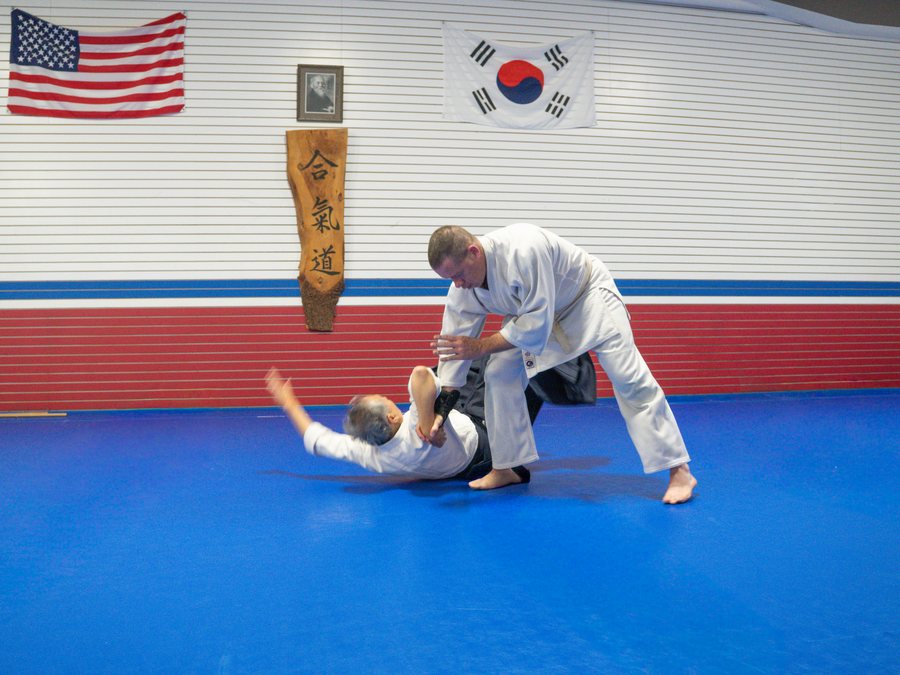
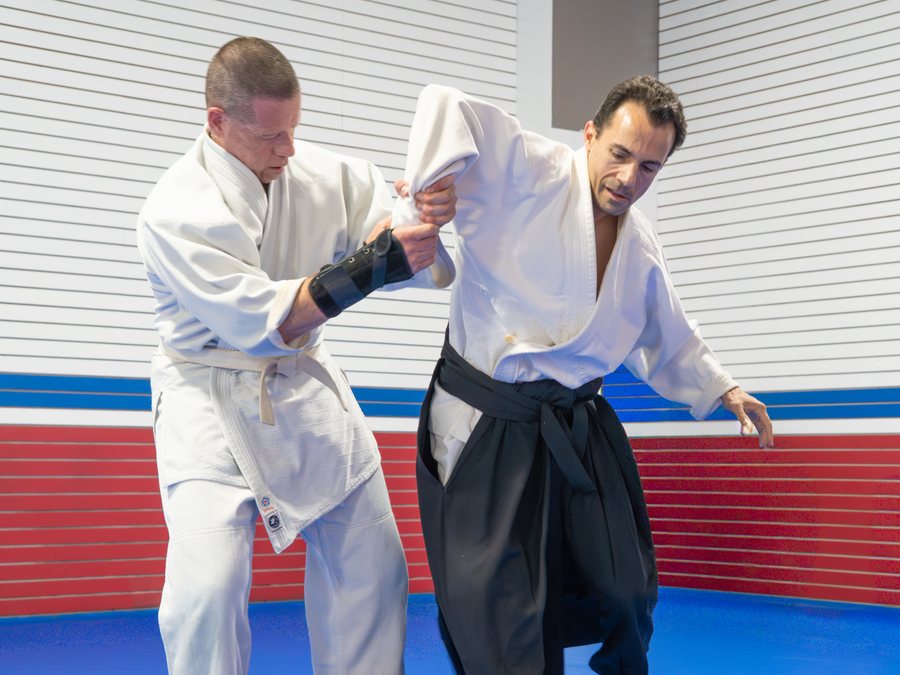
Aikido is a defensive Japanese martial art. Rather than meeting force with force, you learn to blend with an attack and redirect it: freeing yourself from grips, taking an attacker's balance, throwing, and immobilising with pressure on the joints. Because the power comes from turning your hips and from a relaxed, centred posture rather than from muscle, people of very different sizes and ages train together on the same mat.
Is it too late for me to start?
Almost certainly not. We teach adults and students age 15 and up, and people begin here in their twenties and in their sixties. Stamina and flexibility come from the training itself — nobody expects you to arrive fit or limber.
Is aikido good for self-defense?
Yes. Training covers defences against strikes from a range of angles and against being grabbed by the wrists, arms, shoulders or neck, from the front and from behind. You also learn to defend yourself kneeling, and against a standing attacker while kneeling. It is not a competitive sport: there are no tournaments and no sparring for points.
What about fitness?
Ninety minutes of continuous practice is real exercise. Students find their cardiovascular fitness, flexibility and balance improve, but that happens as a by-product of practice rather than as a workout you have to survive first.
Your first class
Nobody expects you to be fit
Aikido does not run on strength or flexibility, so there is nothing to get in shape for first. People start in their twenties and in their sixties, and train side by side on the same mat.
Wear what you have
A T-shirt and sweatpants are fine for your first several classes. No shoes or socks on the mat. You can buy a practice uniform later, once you know you want to keep going.
You will not be thrown on day one
Your first class covers how to roll forward and backward safely, and how to move. You practise with a partner at your own pace, and an instructor stays with you throughout.
Watching is welcome
You are free to sit and watch a whole class before deciding anything, and to talk with the instructors and students afterward. Arrive about ten minutes early and introduce yourself.
Injuries are unlikely
Practice is energetic but it is not designed to be painful, and rolling is taught before anything else precisely so that falling is safe. Injuries can happen in any physical activity; here they are uncommon.
Try it before you join
A $20 mat fee lets you take any class without becoming a member, and covers every class held that day. Monthly membership starts at $50.
The first few months
Early practice concentrates on ukemi — rolling and falling — along with basic movement, posture and a handful of foundational techniques. Proper rolling is smooth and harmless, and it is what makes everything afterward possible.
Classes mix ranks deliberately. Practising with a senior student is how beginners learn fastest, and teaching a beginner is how senior students refine what they know.
Rank follows the U.S. Aikido Federation system, with white belt (kyu) grades from sixth to first and black belt (dan) grades after that. Advancement depends on a set number of practice days and a test in front of the instructors — how quickly that comes is a matter of how often you train.
Come and see a class
We are at the Academy of Martial Arts, 1404 Tolland Turnpike in Manchester, fifteen minutes from Hartford. Turn up ten minutes before any class and watch, or send a note first and we will tell you which one suits you.
Call 860-256-5347, write to shimotengu@icloud.com, or use the form on our home page.
- Tuesday
- 6:30 – 8:00 p.m.
- Thursday
- 6:30 – 8:00 p.m.
- Saturday
- 10:30 a.m. – 12:00 p.m.